




1 Day / Flexible Multi-Day Options
12 Hours
Lunch included at traditional Nara restaurant
Private air-conditioned vehicle — round-trip from Tokyo
Private group — just your party
Expert English-speaking Trip Manager



Japan’s first permanent capital, ancient before Kyoto was even founded, Nara is unlike anywhere else in the country. Sacred deer bow to you in the street, a bronze Buddha the size of a building sits inside the world’s largest wooden structure, and lantern-lit forest shrines lead you deep into a landscape that has barely changed in twelve centuries. Experience all of it in your own private vehicle, with no crowds to rush you and no timetable to follow.
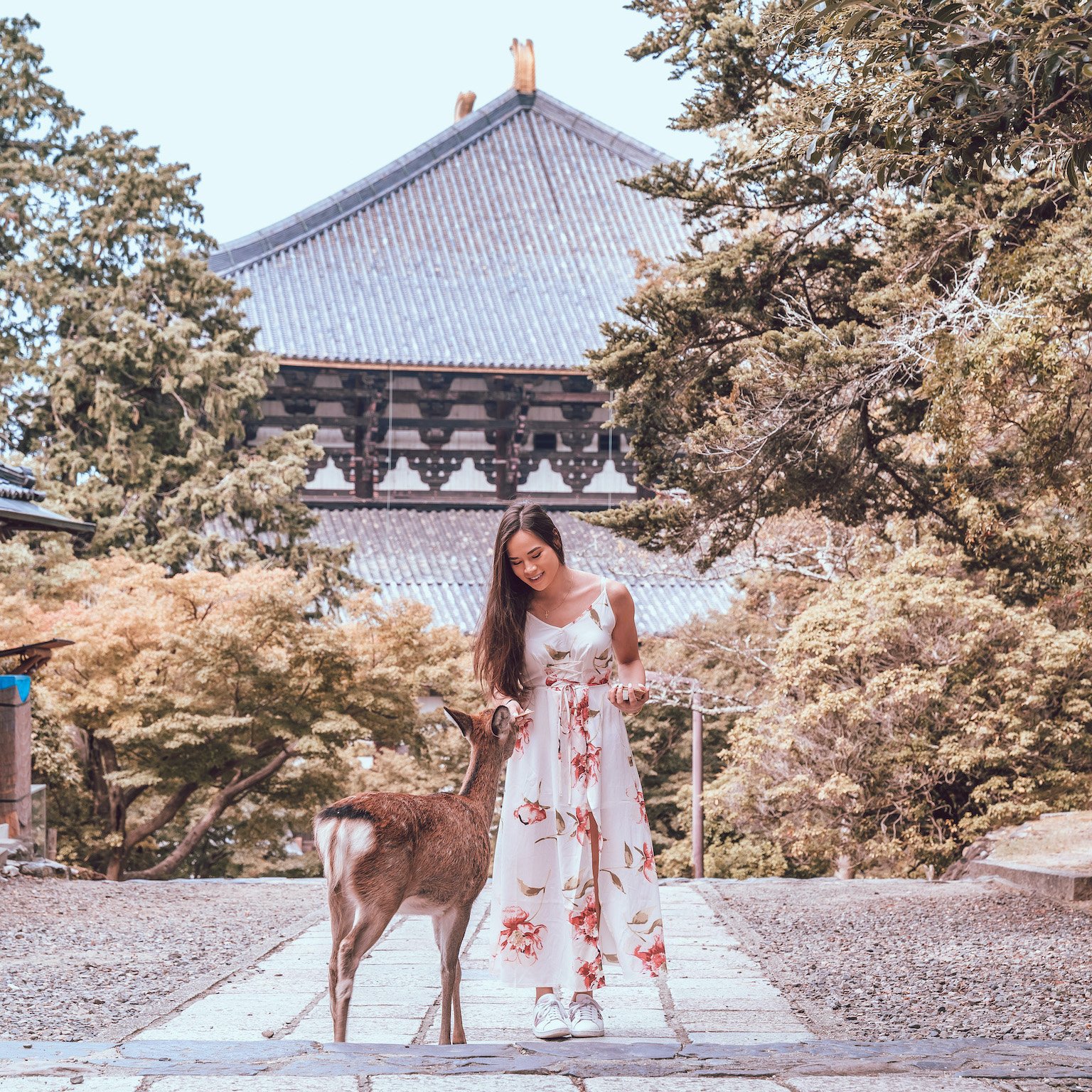
From the moment you arrive in Nara, the sacred deer are everywhere — and they will find you before you find them. More than 1,200 sika deer roam freely through the streets, parks, and temple grounds of Nara, protected by law as designated national treasures and revered in Shinto tradition as divine messengers of the gods. Gentle, curious, and surprisingly bold, they bow their heads to receive shika senbei — special deer crackers sold throughout the park — and will nudge your pockets, tug your sleeve, and pose for photographs with a nonchalance that makes them utterly irresistible. Walking through Nara Park with deer wandering calmly beside you, grazing in the shadow of ancient temples, is one of the most singular and joyful experiences Japan has to offer — and unlike anything you will encounter anywhere else in the world.
The centrepiece of Nara and one of the most awe-inspiring buildings on earth. Todai-ji Temple’s Great Buddha Hall — the Daibutsuden — is the largest wooden building in the world, and the bronze Great Buddha seated within it is one of the largest in Japan, standing 15 metres tall and weighing an estimated 500 tonnes. Cast in 752 AD at the order of Emperor Shomu to bring peace and prosperity to Japan, the Daibutsu has watched over the nation for nearly 1,300 years. Approach through the monumental Nandaimon Gate, flanked by two ferocious wooden guardian statues — the Kongo Rikishi — each standing over 8 metres tall and regarded as masterpieces of Japanese sculpture. Inside the temple, the scale of the Buddha defies comprehension until you are standing directly before it. Try squeezing through the famous hole in one of the interior wooden pillars — said to be the same size as the Buddha’s nostril, and believed to bring enlightenment to all who pass through.
Above and behind Todai-ji, a stone-paved forest path leads up through ancient cedar trees to Nigatsu-do — a sub-temple of Todai-ji perched dramatically on the hillside with a sweeping wooden terrace overlooking the rooftops of Nara and the mountains beyond. Far quieter than the main temple below, this is one of the most atmospheric and beautiful viewpoints in all of Nara. The surrounding Kasuga Mountain Primeval Forest — a UNESCO World Heritage forest that has been left completely untouched for over 1,000 years due to its sacred status — creates a cathedral of ancient trees that fills the air with stillness, birdsong, and the scent of cedar.
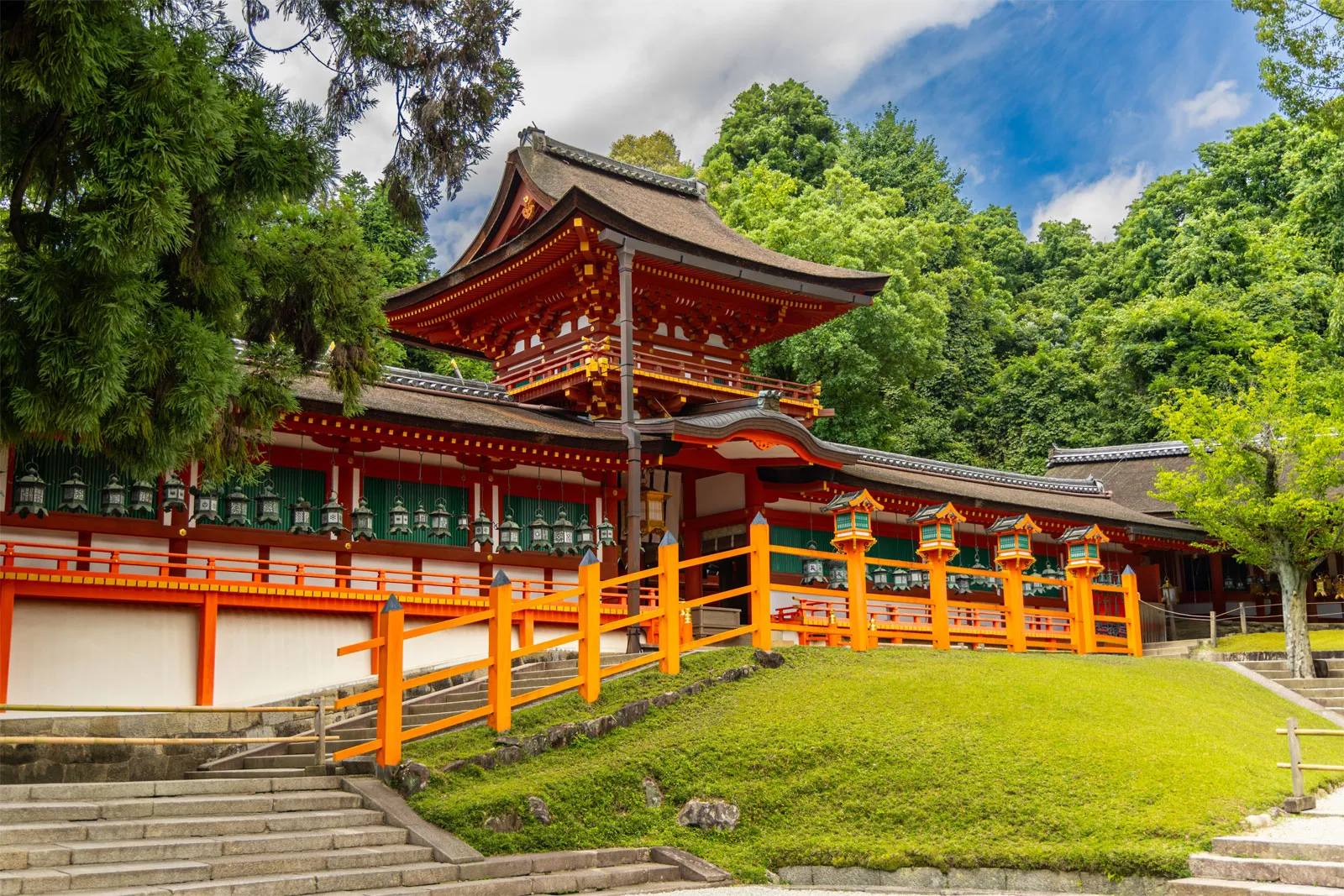
A short walk through the forested deer park brings you to Kasuga Taisha — one of Japan’s most important and most beautiful Shinto shrines, founded in 768 AD and a UNESCO World Heritage Site. The approach along the ancient stone-paved path, lined with over 2,000 stone lanterns covered in moss and shadow, is one of the most atmospheric walks in Japan. The lanterns are lit twice a year during the sacred Mantoro festival, when the entire forest path glows in warm candlelight — one of the most extraordinary spectacles in the Japanese calendar. The shrine’s main halls are painted in vivid vermilion lacquer, hung with hundreds of bronze lanterns, and surrounded by the same ancient forest that has protected them for over twelve centuries. Deer graze calmly at the shrine entrance, completing a scene of almost impossible beauty.
Descend from the shrine into Naramachi — Nara’s beautifully preserved historic merchant quarter, where narrow lanes wind between traditional machiya townhouses that have stood since the Edo period. Wander through local craft shops selling Nara’s famous ink sticks and calligraphy brushes, browse small galleries of traditional textiles, and stop at Nakatanidou — famous across Japan for its extraordinarily fast mochi-pounding show, where workers pound fresh yomogi rice cake at almost unbelievable speed before it is shaped and served warm. Try the persimmon leaf sushi — kakinoha-zushi — Nara’s most beloved local speciality: fresh fish pressed onto seasoned rice and wrapped in fragrant persimmon leaves that gently preserve and flavour the sushi from the outside in. Your guide will lead you through the district’s most atmospheric back lanes, hidden shrines, and centuries-old workshops that most visitors never find.
One of the finest traditional Japanese gardens in the country, and one of the most overlooked stops in Nara. Isuien is a classic shakkei — “borrowed scenery” — garden, designed to frame the Nandaimon Gate of Todai-ji and the forested mountain behind it as living elements of the garden’s composition. Strolling through the teahouse garden paths beside the central pond, with ancient temple gates and forest mountains perfectly reflected in the still water, is a moment of profound calm and beauty after a full day of temples and deer.
Your private vehicle returns you directly to your hotel or preferred drop-off point in Tokyo, arriving comfortably by evening.
Accommodation is not included in this day-tour package. We recommend staying in central Tokyo for a smooth early morning departure. Interested in an overnight stay in Nara? Contact us for recommendations at traditional ryokan inns in the Naramachi area where you can experience the city after the day visitors have gone — an entirely different and deeply peaceful Nara.
A certified, English-speaking tour guide accompanies you throughout the entire day — bringing Nara's extraordinary 1,300-year history, Shinto and Buddhist traditions, imperial heritage, and living deer culture to life at every stop. Your guide holds deep expertise in Japan's ancient capital period and the stories behind every lantern, gate, and sacred stone in the city.
All temple and shrine entry fees for included stops including Todai-ji Temple. Real-time flexibility to linger longer at the places you love and adjust the itinerary to your group's pace, energy, and interests throughout the day.
Round-trip travel in a private, air-conditioned vehicle with door-to-door pickup and drop-off from your hotel anywhere in Tokyo. No shared buses, no fixed departure points — your comfort and schedule come first from start to finish.
International flights to Japan are not included. We recommend flying into Tokyo Narita (NRT) or Tokyo Haneda (HND).
Travel insurance is not included and must be arranged separately before departure.
A traditional Japanese lunch is included at a local Nara restaurant — your guide will select a setting that reflects authentic local cuisine, including Nara's specialities such as kakinoha-zushi persimmon leaf sushi, miwa somen noodles, and seasonal kaiseki dishes. Additional snacks and drinks throughout the day are at your own expense. Carrying some cash is recommended as smaller shops and market stalls in Naramachi may not accept card payments.
IMPORTANT NOTES
Don’t miss your chance to experience Japan’s hidden beauty with our expert local guides. Small groups fill up fast — secure your spot today.

Subscribe for latest news and Offers.

Copyright © 2026 Easy Trip Japan | All Right Reserved